- NCSG Newsletter
- Posts
- January 2025 Newsletter
January 2025 Newsletter
NCSG Monthly Research Colloquium Now Open to All!

National Center for Smart Growth Research & Education
January 08, 2026 • Estimated Reading Time: 4 minutes
Happy New Year!
Dear NCSG community,
Over the last year, I’ve been reflecting on the importance of community for change. Two years ago, NCSG leadership and staff came together to develop a theory of change. One statement that emerged from our conversations encapsulated so much of who we are: "Social, environmental, and economic justice, along with community well-being, are core to the society that we are trying to build. We are driven by a commitment to long-term transformative change."
Since NCSG moved into the Anacostia Building in the fall of 2024, we have welcomed more than 600 people to the space for large convenings like the Beyond the Tracks: Preventing Displacement in Purple Line Communities in partnership with Housing& and Enterprise Community Partners in April and smaller events and meetings like the WABA Vision Zero Youth Leadership Institute kick-off in October or the Purple Line Preservation Network’s bimonthly meetings. We have been fortunate to have this new front door to welcome and support the community and support.
At the same time, we continue to do the responsive research that (we hope) can be a resource for the work of our community, government, and nonprofit partners. This fall, our students worked with faculty advisors to write reports on the planning implications of Data Centers (paper forthcoming), the challenges for affordable housing providers of insurance costs (also forthcoming) and the impact of changes to the student footprint in College Park (read it here!). Our faculty continue to produce work on the Purple Line, Tenant Rights in Washington, DC, and the Purple Line Corridor Coalition.
As we begin another year of research and events, we know that we cannot do this work alone. It is only with our partners at the university, community-based organizations, government agencies, and individuals across the region that we are we able to make transformative change.
-Kate
A Review of APFOs Across Maryland
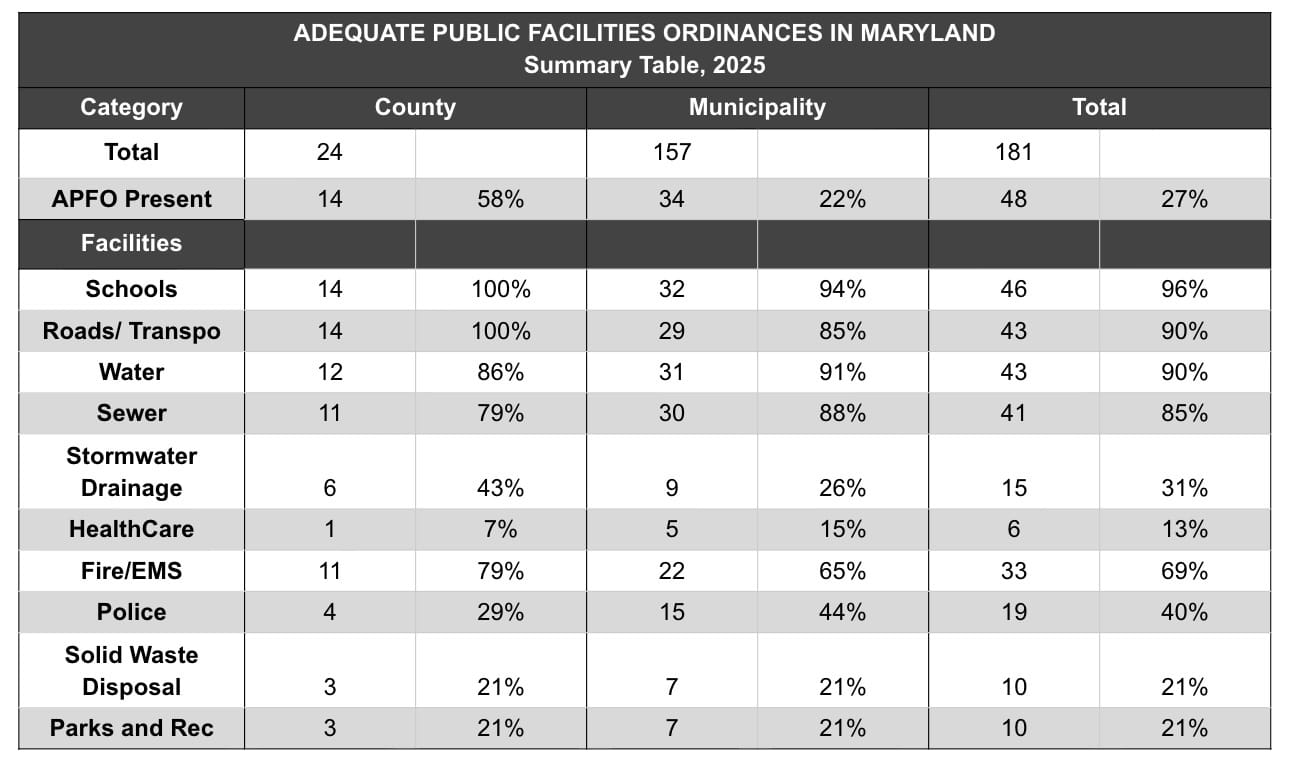
Last spring, NCSG Graduate Assistant Sarah Kamei Hoffman led research and analysis on Adequate Public Facilities Ordinances (APFOs) across the State of Maryland on behalf of the Maryland Department of Planning (MDP). The final report features three major sections: (1) an overview and status update on APFOs in Maryland counties and municipalities, (2) a literature review on the relationship between APFOs and housing, and (3) best practices for jurisdictions considering or using APFOs.
The report also outlines nine best practices are offered to jurisdictions to better craft their APFOs to align with other policy goals and example ordinances from Maryland counties and municipalities are included: (1) clarify the purpose of APFOs and reconsider their use if necessary, (2) integration with comprehensive plan, (3) integration with capital improvements programming, (4) tailored to support multimodal transportation, (5) collaborate to update school planning and capacity management, (6) develop a variety of alternatives to adequacy, (7) improve adequacy calculations and provide access to adequacy information, (8) coordinate within and between jurisdictions, and (9) align and combine with affordable housing initiatives.
In December, Sarah joined David Dahlstrom from MDP; Jason Groth and Melissa Hively from Charles County; and Eric Leshinsky from Annapolis on MDP’s webinar “Designing Adequate Public Facilities Ordinances (APFOs) for Sustainable Growth.”
Recent Publications
Book Review: The Right to Suburbia: Combating Gentrification on the Urban Edge by Willow Lung-Amam (Link)
Can Community Coalitions Unlock Equitable Benefits from Transit Investments? by Nicholas Finio, Dominique Gebru, Katy June-Friesen, Gerrit-Jan Knaap (Link)
Inaugural Student Journal Examines the Shifting “Nature” of Planners by UMD’s Student Planning Association (Link)
Maryland Today article, Housing, Reframed featuring Casey Dawkins (Link)
Maryland Today article, UMD AI Study Aims to Ensure Transit Options Don’t Create One-Way Ticket to Rising Rents featuring Nicholas Finio, Chester Harvey, and Kathryn Howell (Link)
New Case Studies on Community Ownership by the Small Business Anti-Displacement Network (SBAN)(Link)
Safe and Connected Communities in Purple Line Station Areas: No Time to Wait by the Purple Line Corridor Coalition (PLCC) (Link)
Studentification in College Park? Analyzing Student Housing Patterns in the Context of Change along Route 1 by Finn Meggitt and Cole Shultz (Link)
Events
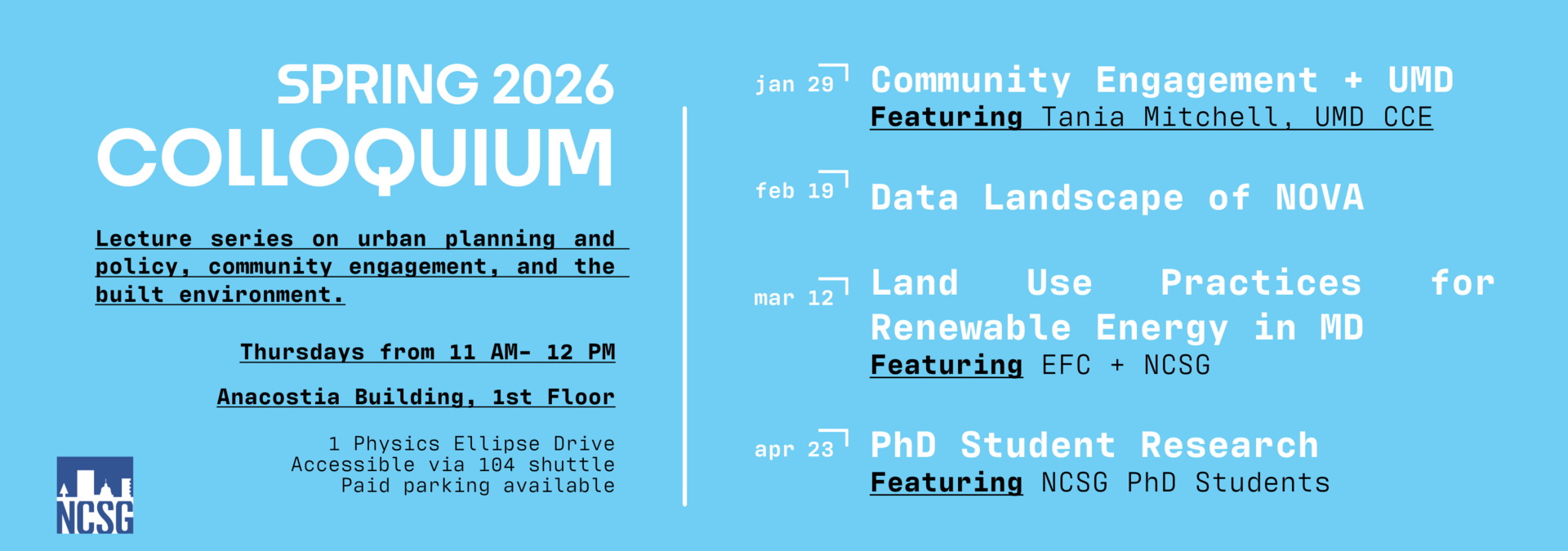
NCSG’s monthly research colloquium is now open to the public! Join NCSG students, staff, and faculty every month during the academic semester to hear more about ongoing research from NCSG and our many partners. NCSG’s research colloquium is a dedicated space for researchers, advocates, and practitioners to come together to connect on ongoing local and statewide planning work.
Please contact Associate Director, Nick Finio, if you would like to present at a future meeting or if you have any questions or comments.

NCSG will be presenting research at Crossroads: A Transportation Equity and Justice Convening on Thursday, January 15th at the MLK Memorial Library in DC.
Access for Whom? Rethinking Equity in Transportation Performance and Investment (Chester Harvey and Behnam Tahmasbi)
Building Powerful Partnerships to Power Decision Making (Ariel H. Bierbaum)
Coalition Building for Equitable Development Along Maryland’s Purple Line (Sheila Somashekhar)
Identifying and Mitigating the Negative Effects of Gentrification Caused by Transportation Investment (Nick Finio)
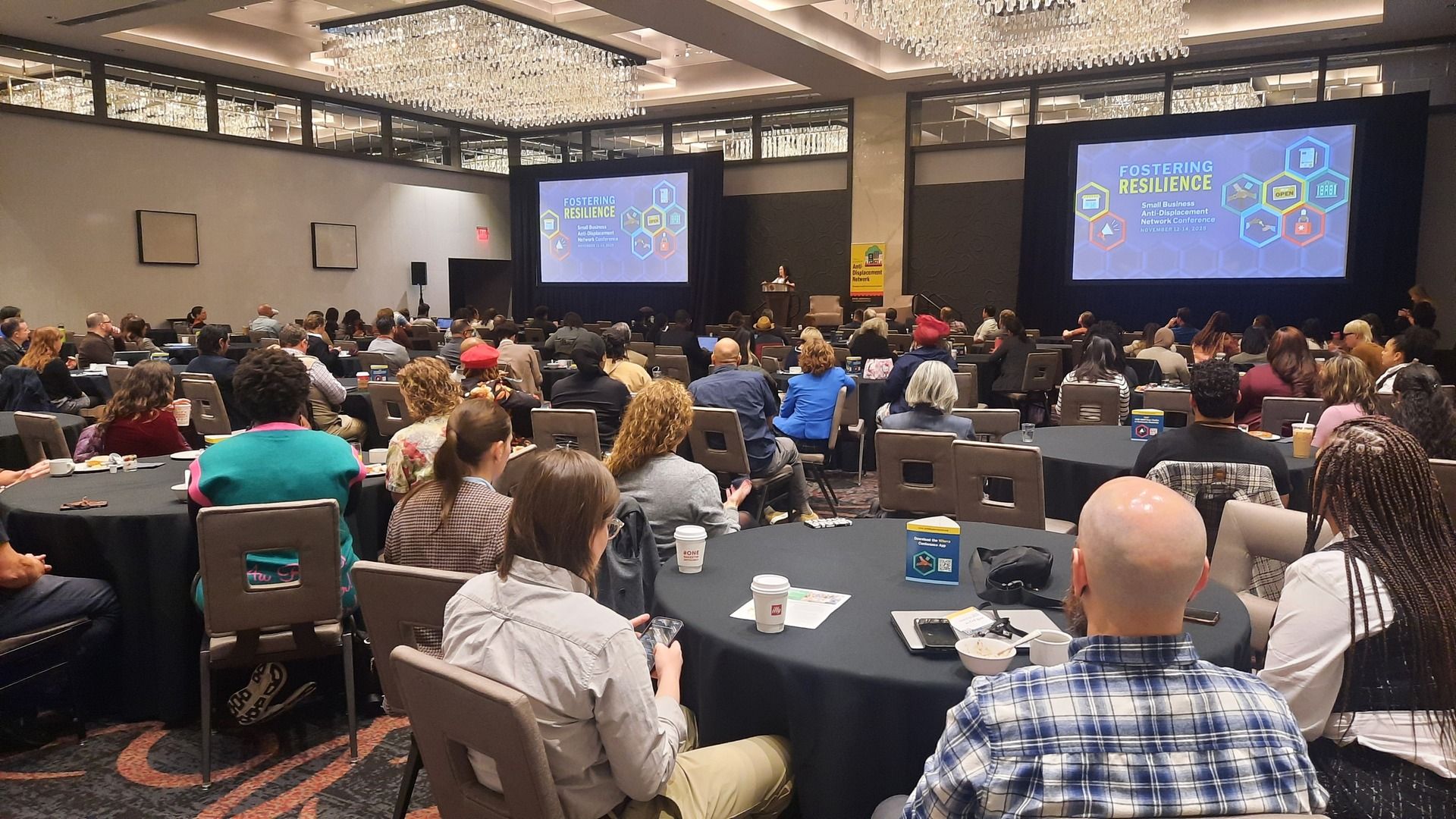
This past fall, more than 200 SBAN members, partners, and friends came together near Washington, D.C., for SBAN’s second national conference, themed “Fostering Resilience.” Attendees came together to strategize about how to support small businesses in these times and build collective resilience, learn from speakers about how to design and implement commercial community ownership models that respond to local needs, and visit D.C.-area neighborhoods to learn from small business owners and neighborhood advocates about how they’re addressing displacement threats.
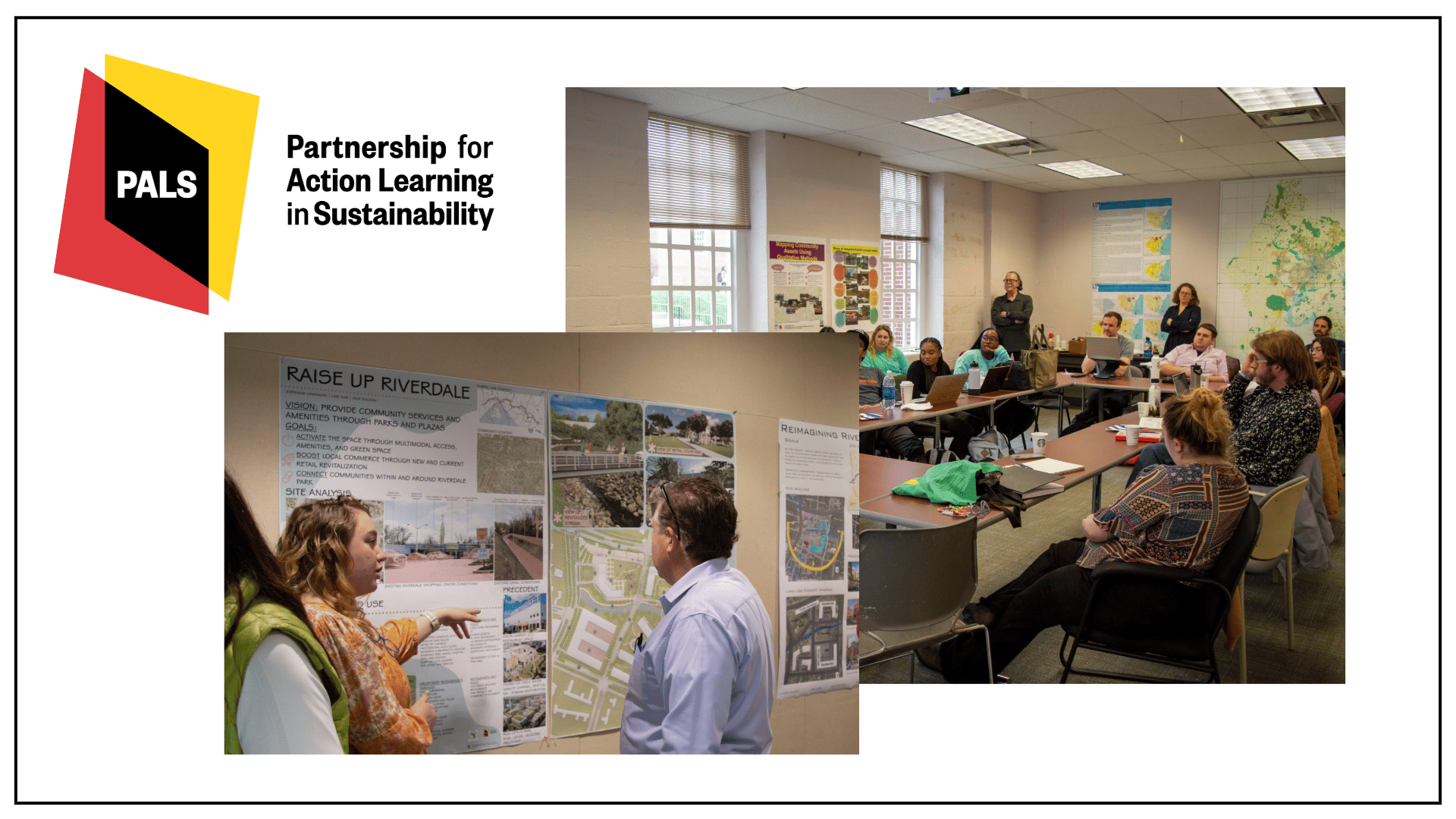
Are you interested in hosting a PALS course this fall? The Partnership for Action Learning in Sustainability (PALS) is a campus-wide initiative that harnesses the expertise of UMD faculty and the energy and ingenuity of UMD students to help Maryland communities become more environmentally, economically, and socially sustainable. PALS is designed to provide innovative, low-cost assistance to local governments while creating real-world problem-solving experiences for University of Maryland graduate and undergraduate students.
Please contact PALS Director, Michelle Kokolis, if you would like to learn more about hosting a PALS course.
Interested in being more involved with NCSG?
📚 Visit umdsmartgrowth.org to see our latest research.
📫 Share our quarterly newsletter with your friends and colleagues.
💡 Support our current and future work by donating to the Center.